


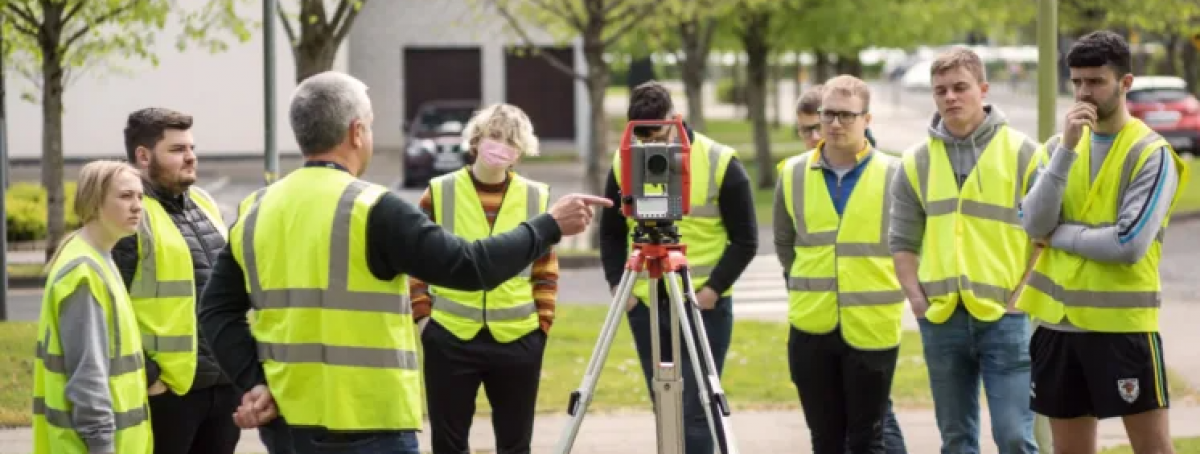
ATU has launched its first suite of fully funded, accredited green skills programmes through GRASP, giving employers across Northern Ireland and Ireland's border counties a cost-free route to upskill their construction workforce in sustainable building, digital construction and resource efficiency, at a time when green-skills shortages are constraining employers' ability to meet decarbonisation targets. No deal consideration applies, as this is a training programme launch rather than a transaction.
Atlantic Technological University is a multi-campus Irish university spanning Galway, Mayo, Donegal, Sligo and other sites, delivering the training under the Green Accelerator Skills Programme, or GRASP.
GRASP is a €9.8 million PEACEPLUS-funded cross-border initiative managed by the Special EU Programmes Body, bringing together education providers and industry partners across Ireland and Northern Ireland, and aiming to equip more than 2,000 learners with green construction skills.
Construction Futures Northern Ireland is an industry partner supporting the programme's rollout.
The strategic logic is straightforward for HR and learning and development functions: the programme offers a fully funded channel to close green-skills gaps in the construction workforce without committing internal training budget, at a time when sustainable construction skills are increasingly scarce.
Dr Trevor McSharry, head of the School of the Built Environment at ATU, said the initiative helps upskill the current workforce in the region for an evolving sector, where sustainability and productivity are becoming more and more important. Fionnuala McKenna, head of strategic development at Construction Futures NI, said access to accredited training strengthens the industry's capacity to meet that transition.
The PEACEPLUS funding model reflects a broader pattern of EU-backed cross-border skills investment, with further modules planned in domestic retrofit, renewable energy technologies and digital construction throughout the programme's lifetime.
For the sector, publicly funded, cross-border skills programmes are increasingly a viable resourcing option for closing decarbonisation-driven skills gaps, and this model looks likely to be replicated as green-transition training needs intensify elsewhere.
Source: Atlantic Technological University












.png)

