


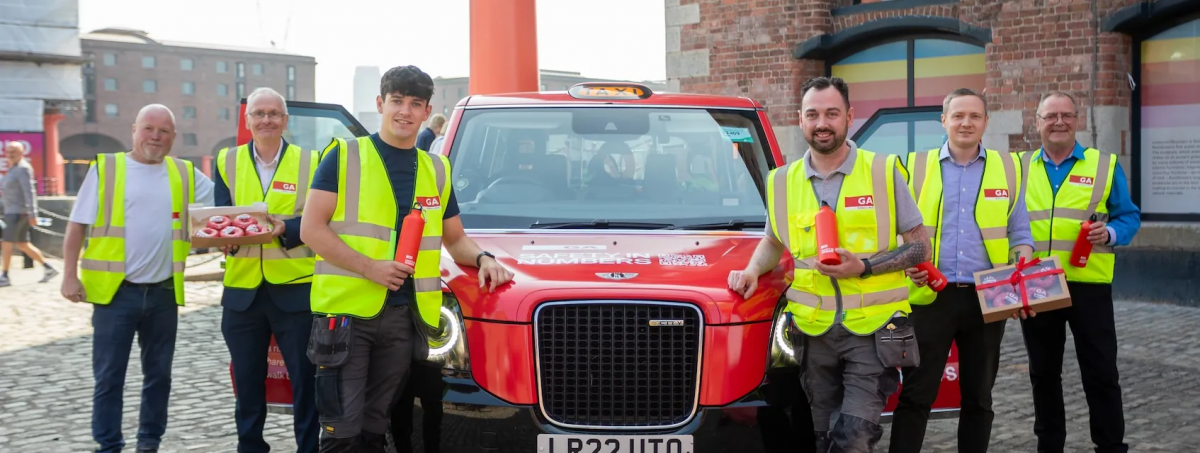
Gilbert-Ash has taken its Safety In Numbers health and safety campaign directly to site teams across the UK and Ireland, giving HR and people functions in construction a practical example of building frontline hazard-reporting culture through direct, in-person engagement rather than top-down policy alone.
Gilbert-Ash is a Belfast-headquartered construction and fit-out contractor employing over 200 people across offices in Belfast and London, holding Investors In People Gold accreditation, with projects shortlisted for the RIBA Stirling Prize five times.
The strategic logic favours in-person engagement over top-down messaging. Two branded taxis, one based in Belfast and one in London, travelled more than 800 miles between them, stopping at sites and offices including Gilbert-Ash's Belfast headquarters, Tate Liverpool, a Dublin hotel project, RIBA's London headquarters, the Royal Academy of Music campus and a site in Bristol, converting a safety message into a felt, workforce-wide experience rather than a memo. Workers at each stop received new hi-vis vests and water bottles as part of the engagement.
The structural driver is the campaign's Spot, Snap, Share hazard-reporting mechanism, which uses QR codes displayed across sites and extends responsibility to everyone working on a Gilbert-Ash site, including subcontractors, addressing a common workforce challenge where subcontracted staff are typically less engaged with a main contractor's safety culture than direct employees.
John McGerty, SHEQ manager at Gilbert-Ash, said the more eyes the company has on the lookout, the safer everyone will be, and that Safety In Numbers is about sharing responsibility and doing the right thing every time. Managing director Ray Hutchinson said the initiative reflects the company's wider As One approach, in which everyone watching out for everyone else makes the workforce safer, and that the campaign gives every person on site the confidence and tools to speak up when they spot a potential risk.
For the sector, the case signals that contractors are increasingly treating direct, workforce-wide engagement as necessary to build genuine hazard-reporting culture, particularly extending accountability to subcontracted workers rather than direct employees alone.
Source: Construction Management











.png)

